
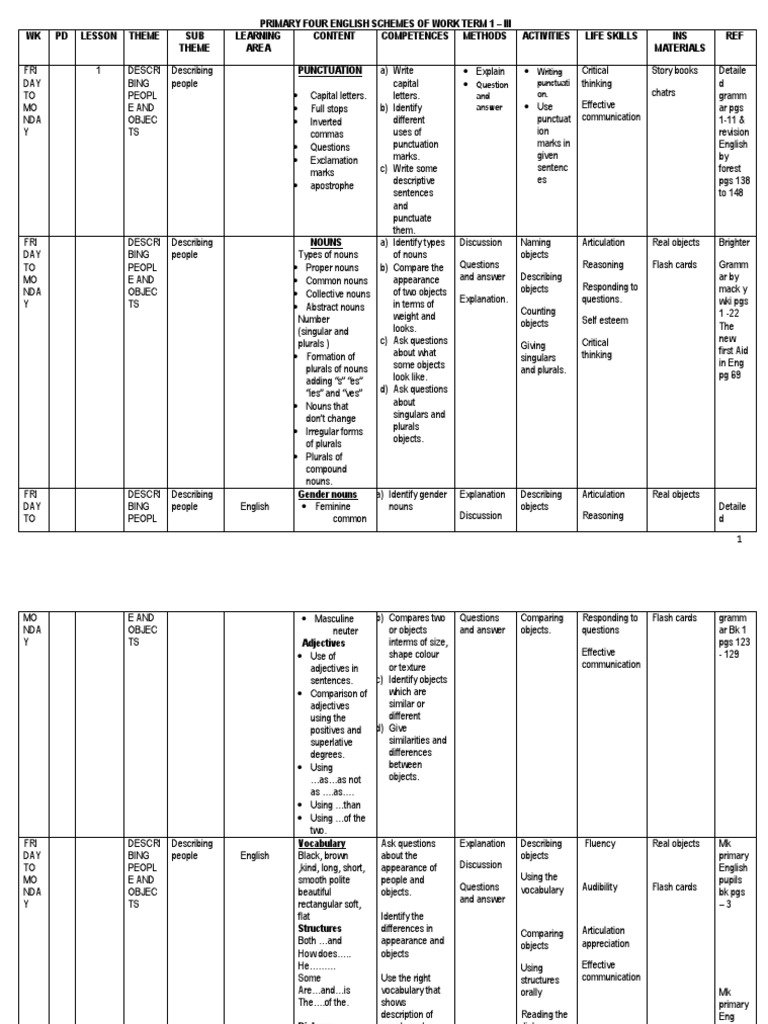
A well-structured scheme of work for primary 4 is essential for ensuring a cohesive and effective learning journey for students. By meticulously planning and organizing the curriculum, teachers can provide a roadmap that guides both educators and pupils through the school year. This detailed framework outlines the topics to be covered, learning objectives, assessment methods, and teaching strategies. It serves as a valuable tool for maintaining focus, tracking progress, and meeting educational standards. Join us as we delve deeper into the significance of creating a robust scheme of work for primary 4 students.

Scheme of Work for Primary 4: A Comprehensive Guide
Welcome to our detailed exploration of the scheme of work for Primary 4 students. In this guide, we will delve into everything you need to know about structuring an effective curriculum for fourth-grade learners. From key subjects to lesson planning and assessment strategies, we’ve got you covered!
The Importance of a Well-Designed Scheme of Work
Before we jump into the specifics of creating a scheme of work for Primary 4, let’s understand why it’s so essential. A scheme of work serves as a roadmap for teachers, outlining the content to be covered, teaching strategies, and assessment methods throughout the academic year.
By carefully planning out the curriculum, educators can ensure that all necessary topics are addressed, students’ progress is monitored effectively, and learning objectives are met. A well-designed scheme of work not only benefits teachers by providing structure but also enhances the learning experience for students.
Key Subjects for Primary 4
Primary 4 is a crucial year in a student’s academic journey, where they build on the foundational knowledge acquired in earlier grades. The key subjects typically included in the curriculum for Primary 4 are:
1. English Language
The English language curriculum for Primary 4 focuses on developing students’ reading, writing, speaking, and listening skills. Vocabulary expansion, grammar rules, and comprehension exercises are all integral components of the English syllabus.
2. Mathematics
Mathematics in Primary 4 introduces more advanced concepts such as multiplication, division, fractions, geometry, and measurement. Problem-solving skills are emphasized to help students tackle real-world mathematical challenges.
3. Science
Science lessons in Primary 4 cover topics like the human body, plants, animals, natural phenomena, and basic scientific principles. Hands-on experiments and observations are often used to engage students and foster a love for science.
4. Social Studies
Social Studies curriculum delves into subjects such as history, geography, civics, and culture. Primary 4 students learn about different societies, traditions, and the importance of being responsible global citizens.
Lesson Planning and Delivery
When crafting a scheme of work for Primary 4, it’s crucial to consider how lessons will be planned and delivered. Here are some key points to keep in mind:
1. Learning Objectives
Each lesson should have clear learning objectives that outline what students are expected to achieve by the end of the session. Objectives should be specific, measurable, achievable, relevant, and time-bound (SMART).
2. Differentiated Instruction
Students have diverse learning styles and abilities, so it’s essential to incorporate differentiated instruction techniques in lesson planning. This may include group activities, visual aids, hands-on projects, and individualized tasks to cater to varying student needs.
3. Engaging Activities
Keep lessons interactive and engaging by incorporating a mix of activities such as games, discussions, role-plays, and multimedia resources. Variety in teaching methods helps maintain students’ interest and enhances learning outcomes.
4. Formative Assessment
Formative assessment plays a crucial role in monitoring student progress and identifying areas where additional support may be needed. Regular quizzes, class discussions, projects, and peer evaluations can provide valuable feedback to both teachers and students.
Assessment and Evaluation
Assessment is an integral part of the teaching and learning process, allowing educators to gauge students’ understanding and progress. In Primary 4, assessments should be designed to measure both knowledge retention and critical thinking skills.
1. Summative Assessments
Summative assessments are typically conducted at the end of a unit or term to evaluate students’ overall understanding of the material. These assessments may include standardized tests, projects, or presentations.
2. Continuous Assessment
Continuous assessment involves ongoing evaluation of students’ performance throughout the academic year. This may include quizzes, homework assignments, class participation, and group projects.
3. Feedback and Support
Providing timely feedback to students is crucial for their growth and development. Constructive feedback should highlight areas of improvement and offer suggestions for further learning. Teachers should also be available to provide support to students who may be struggling with certain concepts.
Integration of Technology
In today’s digital age, technology plays a significant role in education. Integrating technology into the scheme of work for Primary 4 can enhance learning opportunities and foster digital literacy skills.
1. Educational Apps and Websites
Explore educational apps and websites that align with the curriculum to provide students with interactive learning experiences. Platforms that offer instructional videos, games, and practice exercises can supplement classroom teaching.
2. Interactive Whiteboards
Interactive whiteboards can be used to create dynamic and engaging lessons that incorporate multimedia elements. Teachers can display visuals, videos, and interactive activities to enhance students’ understanding of complex topics.
3. Online Collaboration Tools
Encourage collaboration and communication among students by using online tools such as Google Classroom, Padlet, or Microsoft Teams. These platforms enable sharing of resources, discussion forums, and group projects in a virtual environment.
In conclusion, a well-designed scheme of work for Primary 4 is essential for creating a comprehensive and engaging learning experience for students. By carefully planning lessons, incorporating varied teaching methods, and implementing effective assessment strategies, educators can ensure that students meet their learning objectives and reach their full potential.
Remember, every child learns differently, so it’s essential to adapt teaching strategies to cater to individual student needs. With dedication, creativity, and a student-centered approach, teachers can make the Primary 4 curriculum a rewarding and enriching experience for all learners.
CBC Kenya …Schemes of work new model
Frequently Asked Questions
What should a typical scheme of work for Primary 4 include?
A typical scheme of work for Primary 4 should include detailed plans for each subject, objectives, teaching strategies, assessment methods, resources needed, and timelines for each topic or unit of study. It should align with the curriculum requirements and cater to the development needs of students in that age group.
How can a teacher effectively create a scheme of work for Primary 4?
To create an effective scheme of work for Primary 4, a teacher should start by understanding the curriculum guidelines, identifying learning objectives for each subject, breaking down the topics into manageable units, selecting appropriate teaching methods and assessment tools, and ensuring coherence and progression throughout the year. Collaboration with other teachers and reviewing student feedback can also help in refining the scheme of work.
Why is it important for teachers to regularly review and update the scheme of work for Primary 4?
Regularly reviewing and updating the scheme of work for Primary 4 is crucial to ensure that it remains relevant, engaging, and aligned with the changing needs of students and curriculum updates. It allows teachers to reflect on the effectiveness of their teaching strategies, identify areas for improvement, incorporate new resources or technologies, and address any emerging challenges in the classroom.
Final Thoughts
In conclusion, designing a scheme of work for Primary 4 is crucial for effective lesson planning and delivery. It helps teachers organize curriculum content and learning activities in a sequential manner. By outlining objectives, resources, and assessment strategies, educators can ensure consistency and coherence in teaching. Tailoring the scheme of work to meet the specific needs and abilities of Primary 4 students enhances engagement and learning outcomes.